Find stuff

Thursday, 12 May 2016

Metamorphosists

Doctor Moreau, Victor Frankenstein, Professor Farnsworth, clan Tzimisce and various hunchbacks by the name of Igor. There's something fascinating about a scientist meddling in Things Man Was Not Meant To Know.
Because of my tendency to try to build one of these characters in every system (from Lamentations of the Flame Princess, to Don't Rest Your Head, to Changeling the Dreaming), I figured I'd make an actual LotFP class for the concept. Here it is.


Hit Dice, experience, and saves are like a Magic User. All metamorphosists have a 5-in-6 rating in the Medicine skill, and a 2-in-6 rating in the Research skill.
Metamorphosists must be either lawful or chaotic - not neutral. Maybe they're sworn to pursue their understanding of the natural order of the world, placing their faith in the laws and regularities of science. Maybe they're maniacs seeking to usurp God's place as the bringer of life. Either way, their studies have led them away from mundane, ordinary life.

Procedures
A metamorphosist can replicate some of the effects produced by a cleric or magic user. This, effectively, allows them to cast spells through the application of scientific knowledge. These effects are referred to as procedures. 
Performing a procedure requires the metamorphosist to use at the very least a set of Surgeon's Tools, and to have a safe and secure place to work. On top of this, most procedures will require specific organs or materials, which are used up regardless of whether or not the procedure is successful. A procedure takes one day's work to complete for each rank of the spell being mimicked. The subject or subjects must be present throughout, either willing participants, or else restrained.
To use a procedure, if the metamorphosist is not working in a private, well stocked laboratory (worth at least 500 silver per spell level being mimicked), then they must pass a medicine skill roll to pull the procedure off.
No saves can be made to resist a procedure, even if the spell mimicked would normally allow one.
Regardless of the spell's duration when cast by a cleric or magic user, the any changes made by a procedure last indefinitely. They do not count as supernatural, and so are unaffected by anything that detects, dispels or enhances magic.
At first level, a metamorphosist knows how to perform two procedures - Cure Light Wounds and Embalm. For every level they subsequently gain, they learn to perform an additional procedure, which is set by the level they just gained. 

  • At First level, Cure Light Wounds and Embalm are known. Cure Light Wounds requires no additional materials. Embalm is a custom spell for this class, and requires a glass vessel filled with neat alcohol; unlike other procedures it only takes a turn to perform.
  • At second level, Graft is learned. Graft is a custom spell for this class, which requires a living example of the body-part to be replaced.
  • At third level, Change Self is learned. This spell can be cast on any subject, not just the metamorphosist's self, and requires a few square inches of living skin, and possibly samples of fat, muscle, hair and so forth depending on the changes to be made.
  • At fourth level, Delay Poison is learned. It requires the use of a living leech.
  • At fifth level, Cure Disease is learned. It requires no additional materials.
  • At sixth level, Speak with Dead is learned. It requires the dead subject's preserved brain, rather than their head, and a small paper cone that it is hooked up to to produce the voice.
  • At seventh level, Cure Serious Wounds is learned. It requires no additional materials.
  • At eighth level, Neutralise Poison is learned. It requires no additional materials.
  • At ninth level, Feeblemind is learned. It requires the brain-stem matter from a base animal such as a toad or sheep, which is grafted into the victim's own brain.
  • At tenth level, Animate Dead is learned. It requires only the corpses to be re-animated, a lightning rod and a thunderstorm.
  • At eleventh level, Cure Critical Wounds is learned. It requires no additional materials.
  • At twelfth level, Mind Switch is learned. It requires only the two beings to have their minds switched, and swaps their brains.
  • At thirteenth level, Animate Dead Monsters is learned. Like Animate Dead, it requires the corpses to be re-animated, a lightning rod, and a thunderstorm.
  • At fourteenth level, Heal is learned. It requires a few pounds of living flesh.
  • At fifteenth level, Simulacrum is learned. It requires enough living flesh to build the new body (rather than snow), a lightning rod, and a thunderstorm.
  • At sixteenth level, Unnatural Transplant is learned. It requires only the body part responsible for the power to be replicated.
  • At seventeenth level, Clone is learned. It has the same requirements as when cast normally.
  • At eighteenth level, Trap the Soul is learned. It requires a large glass containment vat, which costs the same as and replaces the gem required when cast normally.
  • After eighteenth level, no more procedures are learned.
A metamorphosist is not limited to only perform the procedures they have already learned. If they can justify in suitable techno-babble how they intend to go about the procedure, then (at the GM's discretion) they can give it a shot. As well as the possible Medicine skill roll, a Research skill roll must be made. If the Research roll fails, then - regardless of whether or not the actual procedure was a success - then Something Has Gone Horribly Wrong. It is up to the GM to decide what exactly this is. It could range from an angry mob of torch-wielding peasants, to an outbreak of a horrible new plague, to the patient becoming Horribly Wrong themselves - whatever the GM thinks would best drive home the metamorphosist's hubris.

New Spells

Embalm
Rank: 1
Range: touch
Duration: 1 month per level
This spell causes a body or body part to be preserved perfectly so long as it is left reasonably undisturbed. If it was fresh when the spell was cast, then the body parts will count as 'alive' for anything that needs living flesh.

Graft
Rank: 1
Range: touch
Duration: Instantaneous
This spell replaces a ruined or removed body-part. Although it doesn't heal damage to flesh, it automatically undoes an injury from the How Flame Princess Got That Way rules.

Unnatural Transplant
Rank: 7
Range: touch
Duration: Permenant
This spell allows the target to gain an ability from a defeated monster by grafting the organs responsible onto them. This could be something fairly mundane, such as gills to let the recipient breath water or venom glands to make their bite poisonous. Alternately, it could be entirely supernatural and bizarre, such as medusa's face stitched over the recipient's own to let them turn enemies to stone, or pyroclastic glands that let the recipient breath fire. The organs to be grafted in must be fresh, and must actually fit onto the recipient somewhere.


Three-fold Models are the Indie version of Fantasy Heartbreakers.

So, inevitably, people take apart games and the people who play them to classify them and what they like or (more commonly) dislike about them.
You get the whole GNS shebang which looks at people's 'creative agendas' and what they want out of the game, and stuff like that. Personally, I find that approach kind of lacklustre, as it doesn't tell us anything about the game's writing itself. Plus, the difference between simulating a genre's cliches and 'exploring the themes of a genre' is something I never really saw the distinction in.
Anyway, I tend to classify games into three broad types, based on the focus of their mechanics. Something about gamers, and particularly the ones that write their own games, seems to love dividing things into catagories, and I'm no exception there.

So, first up, we have crunchy games. These are the games where you have several big chunky books full of rules and interactions between rules. You often have a broad underlying mechanic, and then loads of modifications to it for different situations.
These games tend to put a lot of focus on character builds. What you can and can't do is strongly defined by the decisions you make in character creation. Often, a skilled optimiser can make a character that's much stronger than an unoptimised character. These sorts of games tend to involve a hefty character gen (maybe taking up a whole session or more) spent pouring through books comparing options, and then in play fairly strict adherence to the rules. In play, there tends to be a lot of focus on working the system in your favour, so that the raw mathematics of the situation rigorously defines what happens.
Often, these games are heavily combat focussed, but not always. Examples that I particularly like include the various Old World Of Darkness games. GURPS, 3rd and 4th edition D&D, shadowrun, the various 40k rpgs and loads more all come under this bracket.

Then, we have story games. These games put a mechanical focus on the actual plot, and typically give players tools to control who gets to control the narrative. Rules about who gets to narrate what, mechanics that control spotlight and tempo, collaborative storytelling and experimental games are all in this vague group. Games without GMs, or which give players a lot of tools to take over GMing fit in here nicely.
Usually, the mechanics are pretty abstract and universal. You tend to get the ability to come up with your own stats and powers, limited abilities to force the story in particular directions, and control over things that aren't your own PC. These games have much more of a tendency to think of themselves as Art, and to deal with genres that aren't variations on action, horror, fantasy and sci-fi.
Some of these games that I really like include Don't Rest Your Head, Monsterhearts and Lacuna. Other games you might have come across include Dungeon World (and all the other 'powered by the apocalypse' games), Fiasco, Dread, Fate, and way more indie darlings I've never played.

Lastly, there's rules-light games. These games tend to take the focus away from the rules themselves, treating them as an unfortunate inconvenience. Rules tend to not to be universal, and handle stuff on an ad-hoc case-by-case basis. Ideally, of course, these games don't want you thinking about the rules at all, and instead it's about doing smart things IC.
Character gen is usually quick, and often pretty random. Lethality might be quite high. Unlike story games, these games are pretty firm on the distinction between the GM and the Players: you say what you want to do, and the GM controls the results of your actions and literally everything else in the world. Unlike crunchy games, the game tends to rely on GM judgements more than rules - if the mechanics conflict with what the GM thinks 'ought' to happen, the GM takes control, not the rules.
Most OSR games fall in this category. Other games here that I particularly like include Paranoia and Trail of Cthulhu. To be honest, since this is my preferred style of play, I don't really know many games like this that I don't enjoy.

So there we go. Basically, it comes down to how you determine what happens next: strictly following the rules, using an abstract system to control narrative rights, or DM fiat.
Just my thoughts, and probably not massively useful.

Wednesday, 11 May 2016

Ageing in Wolf-packs and Winter Snow

So, I'm working (slowly) on a Wolfpacks adventure where one of the key themes is going to be ageing and de-ageing people. There may be creepy babies involved.
For this, I've been scribbling up some rules on very old and very young PCs. This is what I have so far:

Random Ages
When your character's age becomes relevant, if you already know it, then that's fine. If you said your PC was 22, they're still 22. Otherwise, roll up their age at random, using the following methods.

For child PCs (probably only members of the Orphan class in WP&WS), roll a d10 and add 5, to get a number between 6 and 15. That's how old you are.

For adult PCs (most other classes), you use a slightly more complex method. For this game, we're assuming that 'adult' starts much younger than it does in modern life. Historically, kids in their mid teens were often considered adults and expected to contribute as such. Your basic age starts out at 14. Roll a d4, and add that to your age (for a number between 15 and 28). Then roll a d6. If the result on the d6 was less than the d4, you don't add any more to your age - your age is just 14+d4. If the result on the d6 was equal to or more than the d4, add the d6's result to your age and keep going.
If you added the d6, do the same thing with a d8. Roll it, and then do nothing more if it was less than the d6, or add the number and keep going if it was equal or more. Then do this with a d10, and then a d12, and then a d20 for so long as you keep on rolling equal to or better.
This result gives Most PCs an age of about 16 to 25, and older characters become less and less likely. The maximum possible age is 74, but this is really rather unlikely.

For PCs that start out immortal at level one (none in the core book, but I'm already idly considering classes for the undead, and I don't know what homebrew you might be using. Hell, maybe you want your Morlocks to never age in order to make them even elfier or something), use the same method as for adult PCs. After the d20, you roll a d100, and then keep on rolling d100s until the roll was less than the previous.

The Effects of Age
Adults (aged between 16 and 50 for humans/Neanderthals/Morlocks) work just normally.
Children (aged between 6 and 15 for humans etc) are smaller than adults, which gives them +1 to their AC, and reduces their carrying capacity by 1. This is already included in the Orphan class.
Toddlers (aged between 1 and 5) are handled in one of two ways. Mundane toddlers are fucking useless. They have d6 flesh only, can't do much to be useful, can carry maybe five things without dropping them, and primarily get in your way. An adult de-aged to being a toddler is handled slightly differently. If their hit-dice was bigger than a d6, drop it by one size. (Re-roll your flesh and grit points, or just have one less flesh/grit point per dice if you're lazy). They get +2 to their AC, and reduce their carrying capacity by 2, because they're little. Their movement speed is halved.
Like toddlers, babies (less than a year old for humans) are handled in two ways. Mundane babies have d4 flesh, and can't do much beyond cry, poop, and feed. Adults de-aged to become babies get their hit dice reduced by two sizes, down to a minimum of a d4. (Re-roll hitpoints, or just lose 2 per dice, as before). They get +3 AC and reduce their carrying capacity by 3, because they'e so small. Movement is reduced to a tenth of normal.

You will notice that adults reduced to very young ages can often still fight and act much like they would as an adult. This is the creepy kids effect. Picture a six-month-old baby that produces a stone knife from somewhere in its swaddling wraps and proceeds to attack you like a rabid animal. It's just a baby, sure, but that knife is still a knife and it's fighting far harder than normal babies do. I mean, even if you win the fight, that makes you a baby-murderer. 

Humans (and morlocks and so on) have a maximum lifespan after which they promptly die of old age. De-ageing, new bodies and so on can get around this, but normal healing can't. Creeping up on old age is always a good reason to become a lich. Most humans have a maximum lifespan of 50, plus 2d12. You only need to roll this if you're about to get a load older, and risk dying as a result.
If you roll this, and its less than the age you were already, then the good news is that you were on the verge of keeling over as it was, and had maybe a few months before old age caught up with you. Lots of elderly magicians find knowing that they're going to kick the bucket focusses their minds wonderfully.
There aren't any penalties for being Really Old, unless you want to roleplay being cantankerous and having achy joints and missing the good ol' days. 

Some new spells!
Minor Senescence 
Rank: 1
Range: 5 feet per level
Duration: instantaneous
This spell ages the subject by d12 months. For every level the magician has over 1st, the victim ages another month. You may need to check how old you'll be when you die of old age, and if you're aged above that, you die. No saves are allowed, but Remove Curse undoes the effect.

Minor Neoteny 
Rank: 1
Range: 5 feet per level
Duration: instantaneous
This spell reduces the age of the subject by d12 months. For every level the magician has over 1st, the victim is de-aged another month. If you're de-aged to before the point of birth, you become a helpless foetus, and probably die in short order unless somebody has an artificial womb to pop you in. No saves are allowed, but Remove Curse undoes the effect.

Major Senescence and Major Neoteny are rank 3, and work just the same, but use years instead of months. Overwhelming Senescence and Overwhelming Neoteny are rank 5, and likewise use decades instead of months or years.

Salt Path Necromancy


This is another of my homebrew paths of necromancy, designed to give necromancers in Vampire the Masquerade a little bit more flexibility.

The Salt Path is reasonably well known among the Giovanni. It was derived from the practices of another Mediterranean necromancer-family that the Giovanni married into and subsumed. It deals with wraiths, particularly summoned or bound wraiths, much like the Sepulchre Path does, but focusses on ways to bolster their effectiveness. In many ways, it can be considered a carrot compared to the Sepulchre Path's stick.

Rank 1 ~ Reward the Faithful Servant
This power makes willingly obeying the necromancer an enticing prospect for any wraith they encounter. All wraiths gain power from following their obsessions, much like a vampire does from feeding on blood. The necromancer can induce an obsession with serving them, so that a wraith in their service gains supernatural might in reward. Often, these servants require little or no compulsion, and serve willingly and eagerly.
System: This power requires the necromancer to spend a point of Willpower, and to rolls Charisma + Occult. The difficulty is the target wraith's current pathos pool. If it succeeds, the wraith gains the passion 'serve the necromancer' at one dot for every success. The passion will normally be based around an emotion such as loyalty or idealism. If the roll is botched, then instead the wraith's shadow gains the dark passion 'oppose the necromancer', with a rating of one dot for every 1 in the pool. Note that the wraith is in no way compelled to follow the necromancer's orders, and can completely ignore them if they want, but will gain pathos easily if they choose to serve.
The effects of this power last until the next sunset. The wraith suffers no ill-effects when the passion goes away.

Rank 2 ~ Room and Board
This power binds a wraith to the necromancer, allowing them to affect the necromancer more easily, and even to heal damage to their form by slipping inside the necromancer to slumber.
System: Much like Reward the Faithful Servant, Room and Board  requires the necromancer to spend a point of Willpower, and to rolls Charisma + Occult. The difficulty is again the target wraith's current pathos pool. If the roll succeeds, then the wraith gains the necromancer's own body as a fetter, with a rating of one dot for every success. They will have reduced difficulties to affect the necromancer with arcanoi, among other effects. In addition, every time the necromancer uses this power successfully, the target wraith becomes one step more attuned to the necromancer.
The effects of this power last until the next sunset. The wraith suffers no ill-effects when the fetter goes away, although if the necromancer suffers Final Death during the ability's duration, then the wraith suffers the normal Harrowing for losing a fetter.

Rank 3 ~ Grant Sanctuary
A necromancer can repair damage to a wraith by donating their own vitality and strength.
System: The necromancer rolls Stamina + Occult. For each success, they may spend a point of blood to heal one point of damage to the wraith. If the necromancer wishes to heal levels Aggravated damage, they take a level of Lethal damage (which cannot be soaked or otherwise prevented) for each level of Aggravated damage healed.
This power cannot heal wraiths which are currently embodied in physical form, possessing a physical object, Risen, or similar - only those in their normal immaterial form can be affected.

Rank 4 ~ Monitor the Servants
With this power, a necromancer can watch over those wraiths who have a personal connection to them. They can push their conciousness out to these ghostly servants, becoming aware of their surroundings and actions.
System: A necromancer with this power is always automatically aware which wraiths (if any), have a passion or dark passion relating to them directly, or have the necromancer as a fetter. By spending a point of blood and rolling Perception + Occult (with difficulty equal to the target wraith's Willpower), they can observe one of these wraiths. They see, hear, smell and otherwise sense what the wraith senses, looking out from behind the wraith's eyes. Their perception pools are capped at the number of successes achieved on the roll.
The effect lasts as long as the necromancer wishes, but whilst active they have no awareness of their own body, and fall into a dormant state much like torpor. Unless they are physically injured (which snaps their awareness back to their own body immediately and wakes them back up) they are completely helpless.

Rank 5 ~ An Extension Of The Master
By building on the abilities of Monitor the Servants, this power grants the necromancer incredible control of their ghostly servants. Rather than merely observing, the necromancer can actively intervene in their servant's affairs using their supernatural arts.
System: This power grants additional abilities to the power Monitor the Servants. When the necromancer is observing a wraith, they can cast any Necromancy powers they have on that wraith. Doing so costs an additional point of blood, and their dice pool is capped by the number of successes on the roll to observe. The necromancer can also use necromancy powers on the wraith's surroundings as if they were there themselves (for example, on another wraith that their host is in conversation with). This, however, costs an additional point of blood and one of willpower, and again the dice pool is capped as before.


Thursday, 28 April 2016


A little update.
Wolf-packs and Winter Snow is available to download on drivethruRPG. I'm working on getting the layout done for a print version.
After this, the plan is to get 15 Years in a publishable form, and stick that up too. This might be tricky, due to the need to find art that's not massively copyright-infringey. I don't think I'd get away with just using black silhouettes and claiming its a stylistic choice again.


I'm working on a couple of Wolfpacks modules, fillable character sheets and pre-genned characters, and a DM-screen and player-cheat-sheets package. The modules in question are:
Spires Dreaming Beneath The Ice, a dungeon crawl into antediluvian ruins in the far north. 
and
The Princess Clad In Amber, a location/event based scenario dealing with a mad cult stealing people's babies.

How I run Clerics and so forth.

More LotFP houserules. 


Alignment

Here's how I handle alignment. 
Lawful refers to the divine plan for the cosmos. It is associated with things that are holy (such as nuns/monks, relics, holy sites, and so on), with destiny, and with spiritual enlightenment. The divine is beyond human understanding. The western church's worship of 'God' is a manifestation of this, as are various eastern spiritual traditions. 
Chaotic refers to things that are outright against the divine plan. Magic draws on things outside of our universe and is directly in opposition to the natural divine harmony. Chaotic things are magical, unnatural and alien. 
Neutral refers to the mundane world. It is, essentially, broken. Impure and flawed, since it is no longer proceeding according to the divine plan. It is not, however, actively against the plan in the same way as chaotic things are.
All clerics must be lawful, since their abilities are directly powered by the divine. All magic users and elves must be chaotic, as the magic they use is fundamentally against the divine plan. If a cleric stops being lawful, or a magic user or elf stops being chaotic, then they lose all their spells and any other supernatural abilities.
Most other characters are neutral, but they don't have to be. A chaotic character might have a bloodline tainted by magic, or a lawful character might have been touched by a saint and brought back in line with the divine plan. 
Particularly powerful contact with magic or the divine might make a neutral character become lawful or chaotic.

Clerics
Clerics are mostly religious figures from their local communities. I'm assuming a game run in essentially late-medieval Britain here, so the majority will be Christian priests, monks, nuns or similar. In a different setting, clerics would come from different walks of life - Roman haruspices and pontifices, or Indian yogis and fakirs come to mind.  
Clerics prepare their spells like in the core book, at a set time each day; generally at dawn, midday, dusk or midnight. To prepare spells, you need to consecrate an area first, with at least the following:
  • The consecrated space must be clearly delineated.
  • All chaotic or otherwise magical things must be removed from the area. 
  • A symbol of the cleric's faith must be present. 
  • A turn must be spent cleaning and ordering the space.
If this is done, the process of preparing spells takes hours if the most valuable holy symbol you've got is wooden (or of a similar value), turns if the most valuable holy symbol you've got is steel (or similar) and minutes if the most valuable holy symbol you've got is silver (or similar). You can only prepare each spell once - you can't have two slots hold the same spell.

If you had prepared a spell for the day, and used it, you can re-fill that slot with another spell of that level you haven't yet prepared. You still can't prepare the same spell twice in a day. If you missed your allotted time to prepare spells, you've got to wait until the next day.
To do this, again you need to consecrate a space and pray/meditate for the spell. This takes as many minutes/turns/hours as the spell's rank. Once this is done, make a save against magic; if successful the spell is prepared. If failed, the spell is lost and you can't prepare it again that day. You can improve the power of your consecration with all the following:
  • For each silver piece of food or wine you offer as a sacrifice during your consecration, improve your save by 1.
  • For each lawful supplicant who takes part in the ceremony, improve your save by 1. Neutral supplicants can also join you, but only actually help if they succeed on a charm skill roll. Chaotic supplicants aren't welcome.
  • For each supplicant who takes 1 damage offering blood as a sacrifice, improve your save by 1.  


Clerical Scrolls, Holy Water Etc.

Things like creating scrolls of clerical spells, holy water, and so on all work exactly like in the core book. They can't, however, research new clerical spells. Any cleric can automatically read and use any clerical scrolls (and similar items) that they find.  Any lawful or neutral character can identify and translate the scroll with a successful appraise roll. A lawful character who can't cast spells can still use a clerical scroll (or similar) if they can read it and make a successful save versus magic. If the roll is failed, then the spell fails and the power is used up.

Cults
The religion a character follows defines which spells they can access. The default cleric spell list in the core book is for Christian faiths; members of other cults will use altered spell lists, which may include custom spells just for that cult or spells from the magic-user list. I'm not sure if Jewish clerics would use the same spell list (since it's essentially biblical in flavour) or have a slightly different one. When a player wants to play a Rabbi, I'll work it out.
You can't use spells from outside your own spell list, including casting them from scrolls or similar. You can, however, convert to a new faith. This probably takes a few months, but other than the role-playing and loss of access to some spells, there's no penalties for it.


An Example Cult - The Sol Invictus
The cult of Mithras, the Sol Invictus, worship the sun as a manifestation of the divine. They were a mystery cult at the time of the Roman empire, and persist to the modern day, in an underground, secretive form. The cult's mythology contrasts darkness and light, with symbolism of secrets and mysteries being uncovered by the light of enlightenment, and this is reflected in their spells.
Rank 1 - Bless, Command, Cure Light Wounds, Detect Evil, Identify, Light, Protection from Evil, Sanctury, Turn Undead
Rank 2 - Augury, Continual Light, Enthral, Forget, Heat Metal, Heroism, Resist Cold, Resist Fire

Rank 3 - Cure Disease, Detect Illusion, Dispel Magic, Magic Vestment, Remove Curse, Sacrifice
Rank 4 - Cure Serious Wounds, Detect Lie, Divination, Protection from Evil 15' Radius, Spell Immunity, Wall of Fire
Rank 5 - Commune, Cure Critical Wounds, Dispel Evil, Quest, Secret Chest, True Seeing
Rank 6 - Anti-magic Shell, Forbiddence, Find the Path, Heal, Tongues, Word of Recall
Rank 7 - Holy Word, Earthquake, Remote Surveillance, Vision

Monday, 25 April 2016

How I do combat, and also house-rules for gear.


That's right, more of my Lamentations of the Flame Princess house rules. One of these days I should probably actually gather them all up in one place.
By and large, monsters and enemies will use these just as much as PCs. If you're fighting a human soldier, don't be surprised if they use these options to get an edge. 

Combat Options
Rather than the combat options listed in the book, every character can use the following options. As well as fighters themselves, if  a class gets access to fighter combat options in core LotFP, then they count as a fighter when using these options.
  • Flurry - you get +2 to hit, and -4 armour class. If you're a fighter instead get +2 to hit and -2 armour class. Only usable in close combat. 
  • Back Up - you get -4 to hit, and +2 armour class. If you're a fighter, instead you get -2 to hit and +2 armour class. Only usable in close combat.
  • Go for the Throat - you get -2 to hit and -2 armour class, but deal +2 damage, or +4 damage if you're a fighter. This even works on enemies without throats, so long as you can explain where the Weak Spot is that you're hitting for Massive Damage.
  • Parry - you don't get to make an attack, and spend your entire action defending yourself. +4 armour class, or +6 if you're a fighter. 
  • Aim - you skip your action this turn to get +4 to hit with a ranged weapon next turn, or +6 to hit if you're a fighter.
  • Sneak Attack - make a Sneak Attack skill roll. If you succeed, your attack deals damage directly to flesh. To do this, you actually need a way to get the drop on your enemy - shooting from a hidden position, no sign that you're armed, etc.
Hands
If you have a second weapon in your off-hand, get +1 to hit with close-combat attacks. No, you don't get multiple attacks for duel-wielding, it just gets easier to land a blow. If you've got a pistol in both hands, you can also do this - firing both (meaning you use up ammunition and will need to reload) gives you +1 to hit, as its likely something will hit.
If you've got a shield, buckler, cloak (of cloak-and-dagger fame) or similar parrying item in your off-hand, get +1 to your AC. If it's a shield, you get an extra +1 to your AC against arrows, thrown weapons and so on.
If both hands are on your weapon, get +1 damage.

Initiative
Use group initiative unless there's a compelling reason not to. The group's initiative roll is modified by the best Dexterity modifier in the group. 

Gear
Assume a silver standard - prices may be converted down from gold if a supplement assumes a gold standard.
Use the firearms and related equipment from the back of the book, but not the historic armour given. 
If you can't afford a spell-book, you can record your spells in a blank book. One book is enough for a spell. Alternatively, you can spend twice as much as for a blank book to have the spell inscribed onto something, such as tattooed onto your skin or carved into the interior of a wagon.
Wooden holy symbols can be made into a part of any wooden item. Likewise steel holy symbols into any steel item and silver ones into any silver item. Yes, you can have a wooden stake that's also a holy symbol if you really, really hate vampires. Doing this costs double, but makes the item non-encumbering and means you don't need a free hand to brandish it.
Ignore the armour types listed (other than shields) and instead use the rules for armour given later.
You can buy bucklers, but only in the city. They cost 5 SP, and give you +1 armour class but don't give you the extra AC versus missiles.
Specialist's Tools are split up into surgeon's tools, artist's tools, thieves tools, and engineer's tools. All cost the same, specify which you're buying when you take them. They cover basically everything you'd need for the profession given. If you can think of something else you ought to have a tool kit for, it's probably doable.
You can (and probably should) have everybody in the group cash in a bit towards buying some sort of transport for you all.

Firearms
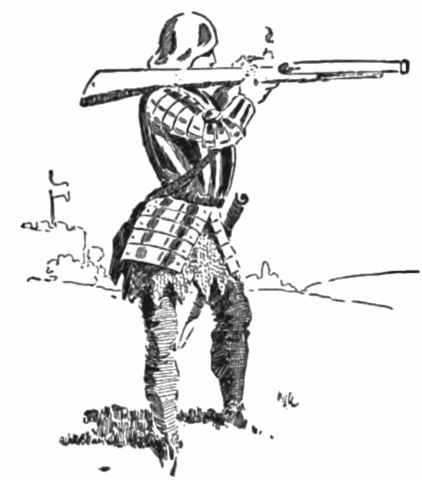
Firearms have no chance to misfire in normal conditions, because remembering to track that is fiddly. Instead, in moist conditions, matchlocks suffer -2 to hit and flintlocks -1. In very wet conditions, matchlocks suffer -4 to hit and flintlocks -2. Wheel-locks don't take penalties for the damp.
Rather than ignoring a certain amount of AC, firearms simply cap the enemy's AC at 16. (Similarly, Light and Heavy crossbows cap the enemy's armour at 18 and 16 respectively).
You can buy firearms that are crude. These cost half as much as normal and don't cap AC.
You can totally buy artillery pieces if you're rich enough, or pool your money with other players. However, turning up to a town with a big-ass cannon will cause its own problems, as will trying to fit one down a dungeon. 

Armour
So, I wanted to have mix-and-match armour as a thing. The early-modern armour in the back of the LotFP book is a step in this direction, but I wanted to take it a bit further. This way, you can have adventurers scavenging bits of armour here and there, and decking themselves out with a mixture of leather, chain and plate depending on what they can afford. 
It just feels cooler to say that you're kitted out with a brigandine, tassets, gauntlets and a sallet helmet than to say you're in chainmail, even though both are AC 16.
You don't buy armour in whole suits, you buy it in bits. Each bit of armour you wear improves your AC by 1. However, you can only have one bit of armour on a given body-part (your body parts, for this exercise, are the head, shoulders, arms, hands, torso, groin, legs, and feet). Better armour types cover less body parts meaning you can fit more on you for more protection.
The armour you wear counts towards the number of items you're carrying. The more heavily armoured you are, the more individual items you've got on. Ignore all that stuff about '+1 encumbrance if you're wearing chainmail', and just work out standard encumbrance.
Where you're wearing armour matters for things like attacks that target your head specifically; wearing armour on a given location might let you soak damage with your Grit rather than it going straight to your flesh.
You'll notice that all the leather armour costs as much as 'leather armour' in the core book, and gives the same protection (although it encumbers more, you can even wear it with a helmet!). Similarly, all the mail armour costs as much as chainmail in the core book and all the gothic plate costs as much as plate armour in the core book.
The pieces of armour available to you are:

Leather Armour
  • Leather Jack. Worn on the shoulders, torso, and groin. Costs 10 SP in the city, or 20 SP in the country.
  • Cuir Bouilli. Hardened pads and plates of boiled leather. Worn on the arms, legs, hands and feet. Costs 15 SP in the city, or 30 SP in the country.
Mail (or chain) Armour 
  • Hauberk. A long shirt of chain armour. Worn on the torso and groin. Costs 25 SP in the city, or 50 SP in the country.
  • Chauces. Mail worn on the legs and feet. Only available in the city, where it costs 30 SP.
  • Voiders. Mail worn on the arms and hands. Only available in the city, where it costs 30 SP
  • Mail Coif. Worn on the head and shoulders. Costs 15 SP in the city, or 30 SP in the country.
Partial Plate Armour
  • Sallet. Worn on the head. Worth 25 SP in the city, or 50 SP in the country.
  • Tassets. Worn on the groin and legs. Only available in the city, where it costs 40 SP.
  • Pauldrons. Worn on the shoulders and arms. Only available in the city, where it costs 40 SP.
  • Brigandine. Worn on the torso and shoulders. Only availible in the city, where it costs 40 SP.
Gothic Plate Armour
  • Closed Helm. Worn on the head. Worth 75 SP in the city.
  • Spaulders. Plate armour worn on the shoulders. Only available in the city, where it's worth 150 SP.
  • Cuirass. A breastplate and backlpate. Worn on the Torso. Only available in the city, where it's worth 350 SP.
  • Cuisses. Worn on the groin. Only available in the city, where it's worth 175 SP.
  • Greaves. Worn on the legs. Worth 100 SP in the city, or 125 SP in the country. 
  • Vambraces. Worn on the arms. Worth 100 SP in the city, or 125 SP in the country.
  • Gauntlets. Worn on the hands. Only available in the city, where it's worth 50 SP.
  • Sabatons. Worn on the feet. Only available in the city, where it's worth 50 SP.